Piazza Navona history in short
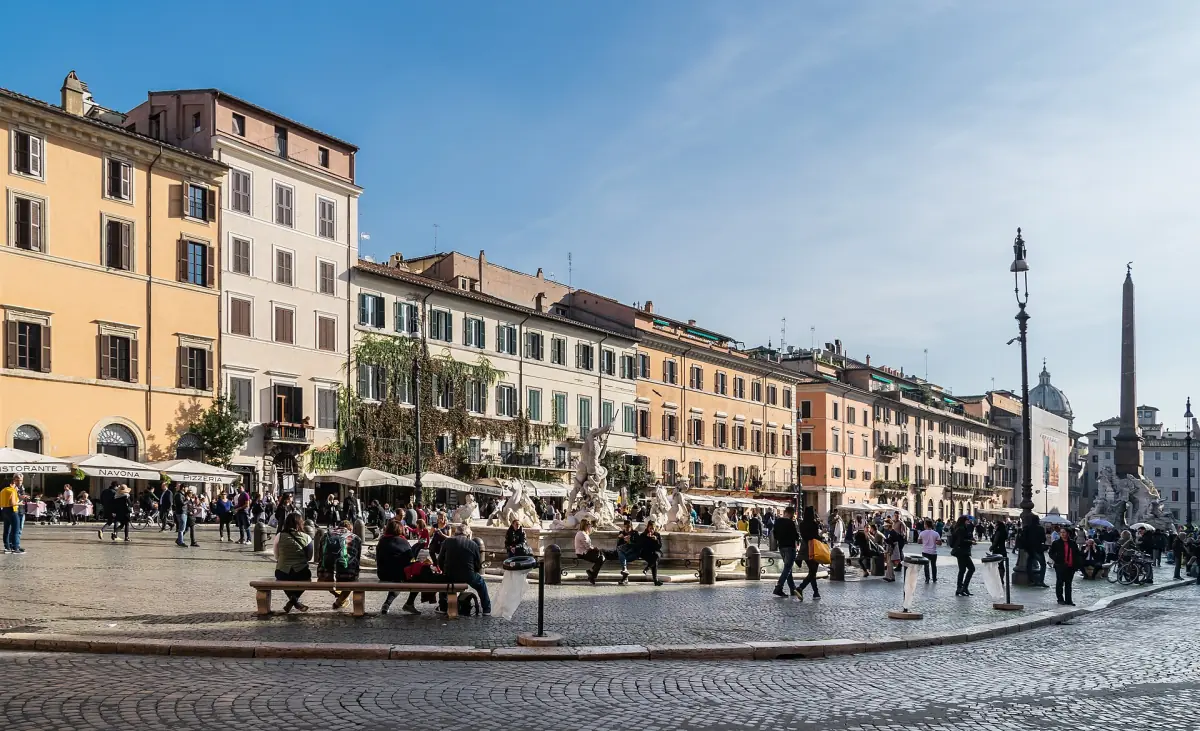
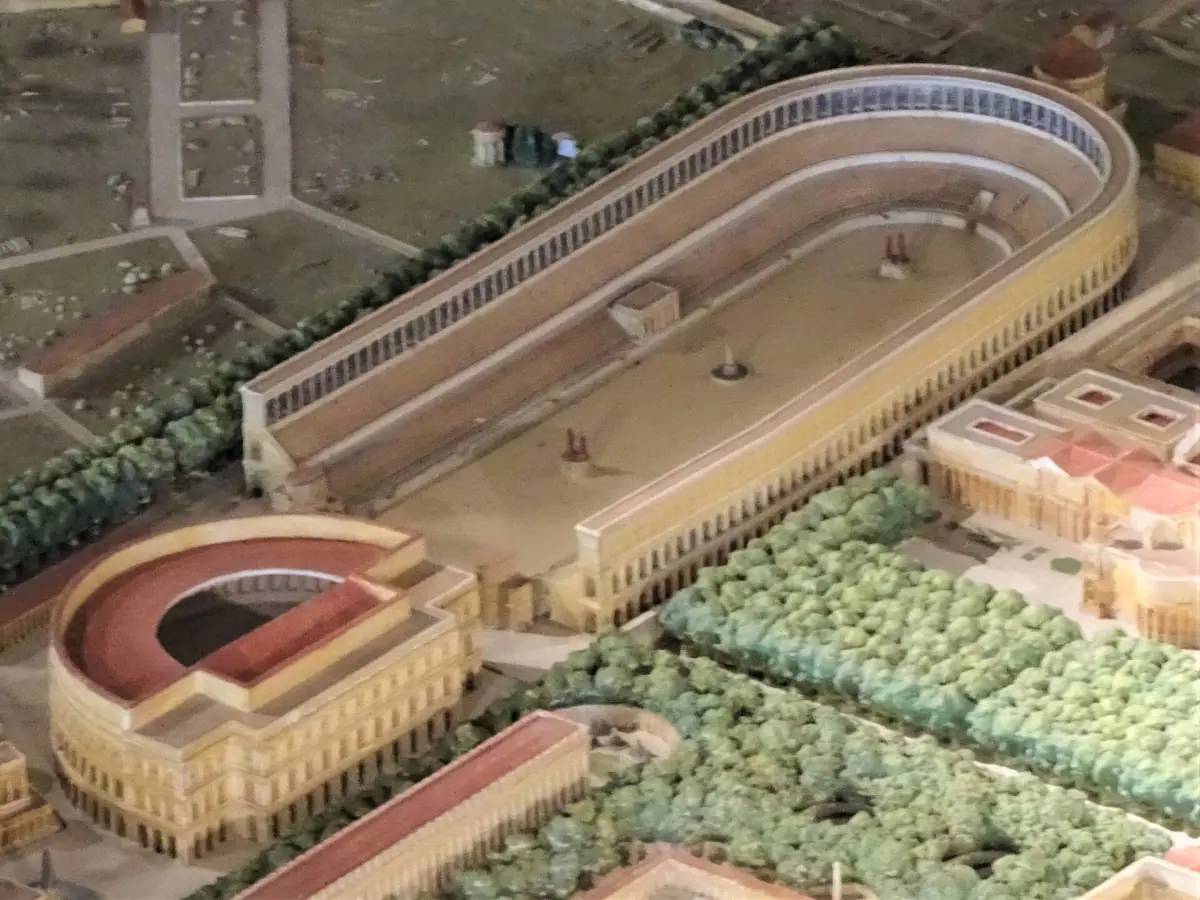
The story has three layers. In 86 AD the Stadium of Domitian was inaugurated here for athletic contests. Over the centuries houses and palaces grew around its track and kept its outline. In the 17th century Pope Innocent X Pamphilj turned the long open space into a Baroque showpiece with a new fountain, a new church and a family palace.
That is why the square is a long oval and not a rectangle. The shape is Roman, the look is Baroque.
Timeline of Piazza Navona
The main dates of the square.
| Date | What happened |
|---|---|
| 86 AD | The Stadium of Domitian is inaugurated for the Certamen Capitolino Iovi |
| 1574–1575 | Giacomo della Porta designs the basins of today's northern and southern fountains |
| 1648–1651 | Bernini's Fountain of the Four Rivers is built for Innocent X Pamphilj, with several sculptors |
| 15 August 1652 | Construction of the new Sant'Agnese in Agone begins under Girolamo Rainaldi and his son Carlo |
| 1653 | Borromini takes over the church |
| 1655 | The central figure of the Fontana del Moro is made after a design by Bernini |
| 17th century to mid-19th century | The square is flooded on August weekends |
| 1869 | The market moves to Campo de' Fiori |
| 1873–1874 | The Neptune group is added after a competition; the Moor fountain's older figures are replaced by copies |
| 1960 | Palazzo Pamphilj next to Sant'Agnese becomes the seat of the Brazilian embassy |
From stadium to square
The Stadium of Domitian was a long track for athletic contests, with a rounded short end. When the stadium was no longer used, buildings rose on and around it. The track became an open space, and the buildings kept its outline. The remains still lie below street level; see the Stadium of Domitian page for their current status.
Where the name comes from
The name Navona is traced back to the word for games, agones, the contests held in the stadium. Sant'Agnese in Agone carries the same root: in agone refers to the games. Tradition links the church to the martyrdom of Agnes at this place. Treat it as tradition, not as a proven detail.
Walks through Piazza Navona and its history
Guided walks around Piazza Navona and the Centro Storico, with live prices and availability. Check the meeting point and what each tour includes before you book.
The Pamphilj square
Innocent X shaped what you see today.
The Fountain of the Four Rivers
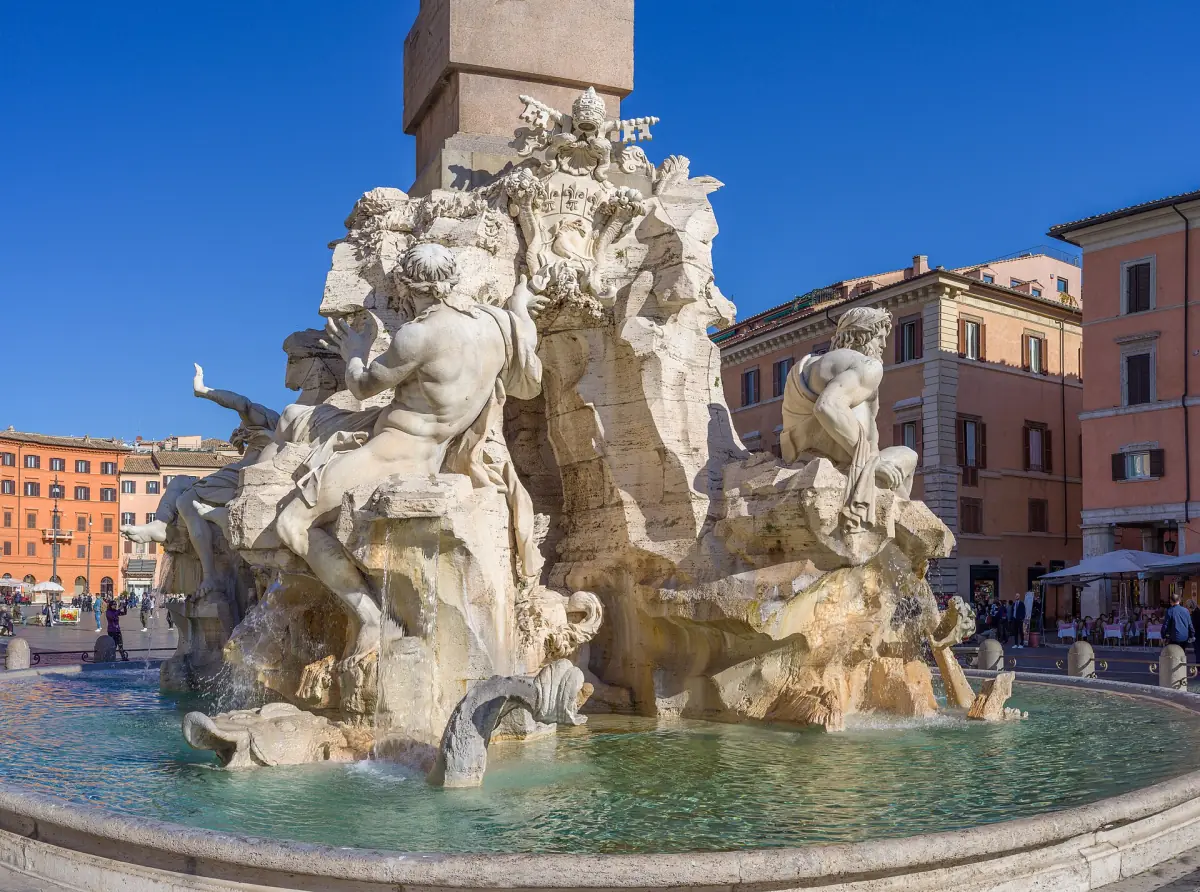
Innocent X Pamphilj ordered the fountain from Gian Lorenzo Bernini. It was built between 1648 and 1651 with several sculptors, so not every figure is by Bernini's own hand. The four rivers stand for four continents: the Danube for Europe, the Ganges for Asia, the Nile for Africa and the Río de la Plata for America. A pierced travertine rock carries an obelisk, a Roman work of Domitian's time that came from the Circus of Maxentius on the Via Appia.
Fountain of the Four Rivers →Sant'Agnese in Agone
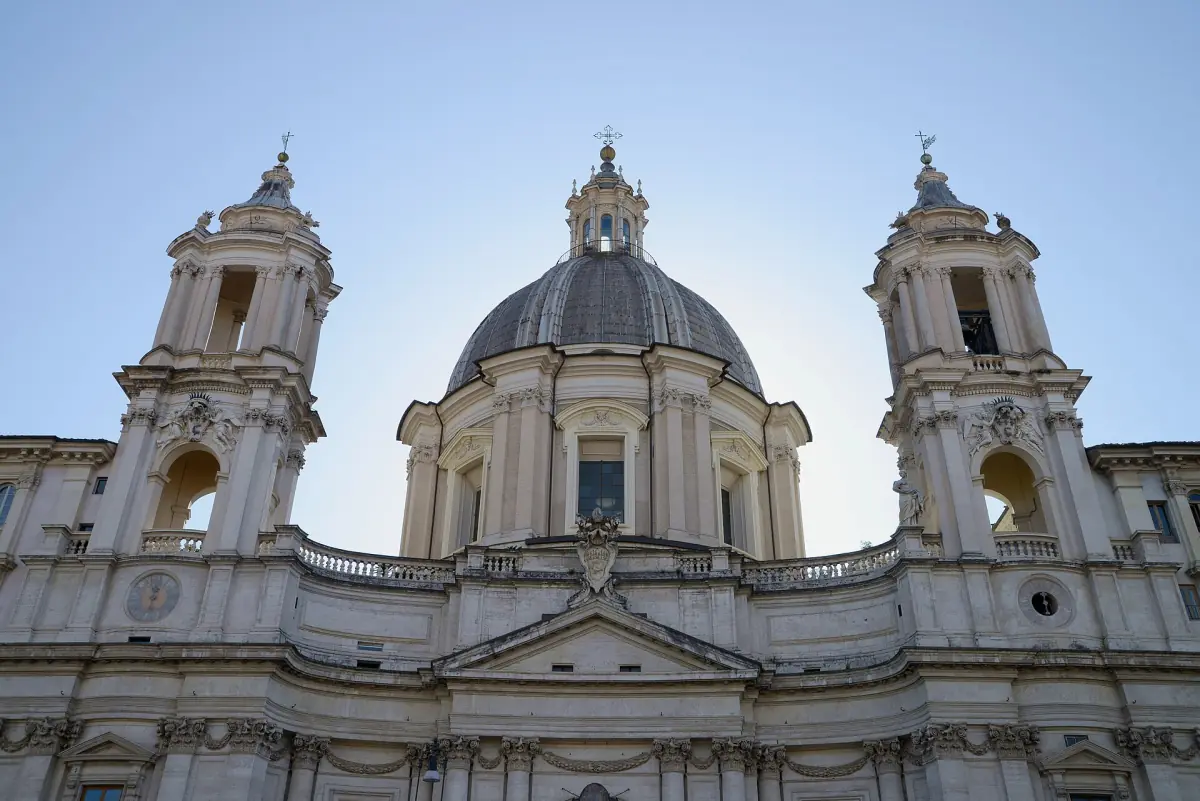
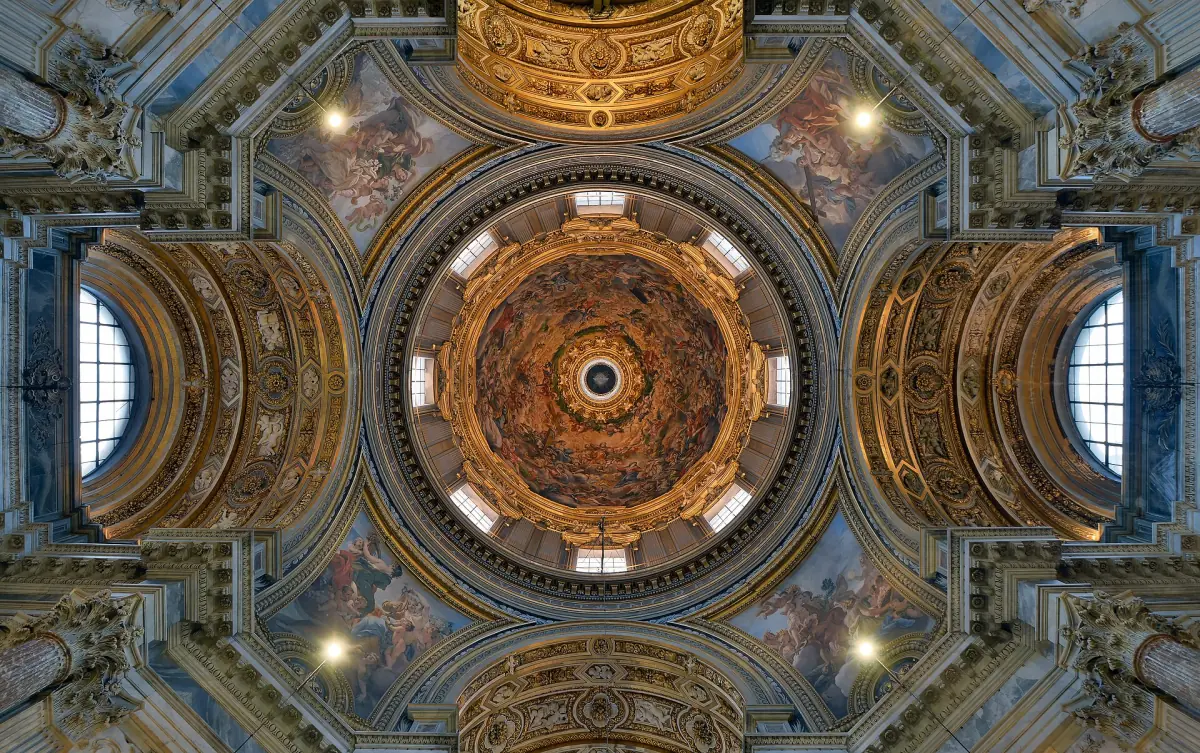
The church was rebuilt from 1652 under the same pope. Girolamo Rainaldi and his son Carlo started it, and Borromini took over in 1653 and changed the facade, the impression of the dome and the entrance hall. Saying that Borromini alone built it is too simple.
Sant'Agnese in Agone →Palazzo Pamphilj
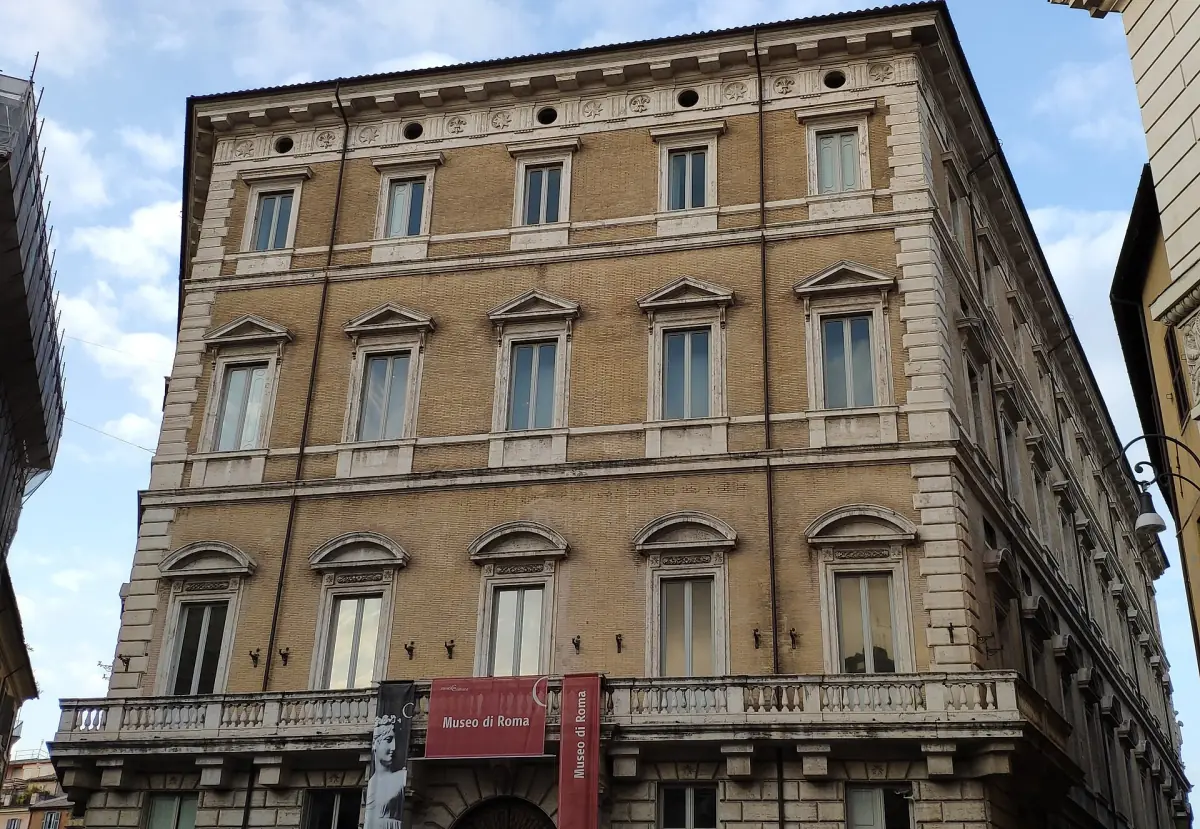
The palace next to the church belonged to the family. Since 1960 it has been the seat of the Brazilian embassy. Do not mix it up with Palazzo Braschi or with the Galleria Doria Pamphilj on the Via del Corso.
The other two fountains
The south and north fountains are older than the central one, but they changed later.
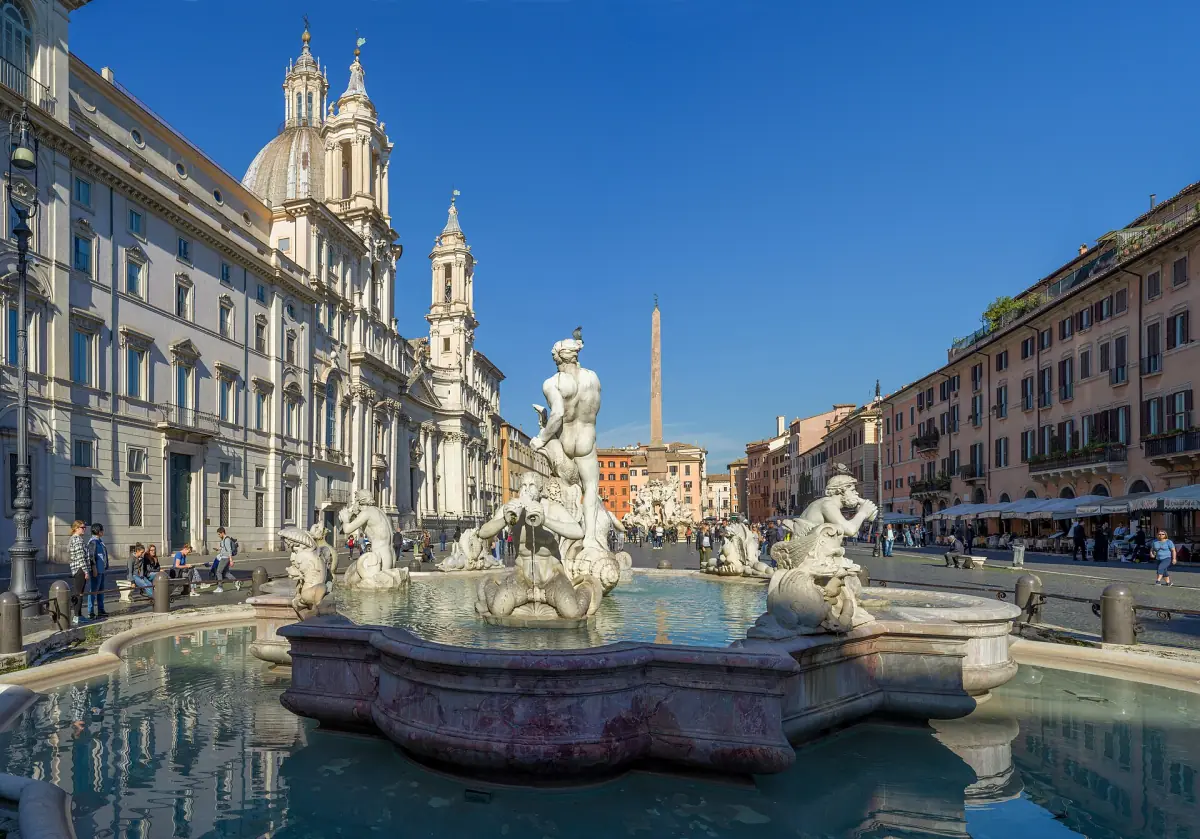
Fontana del Moro (south): Giacomo della Porta made the basin in 1575. The central figure was made in 1655 by Giannantonio Mari after a design by Bernini. The older surrounding figures were replaced by copies in 1874.
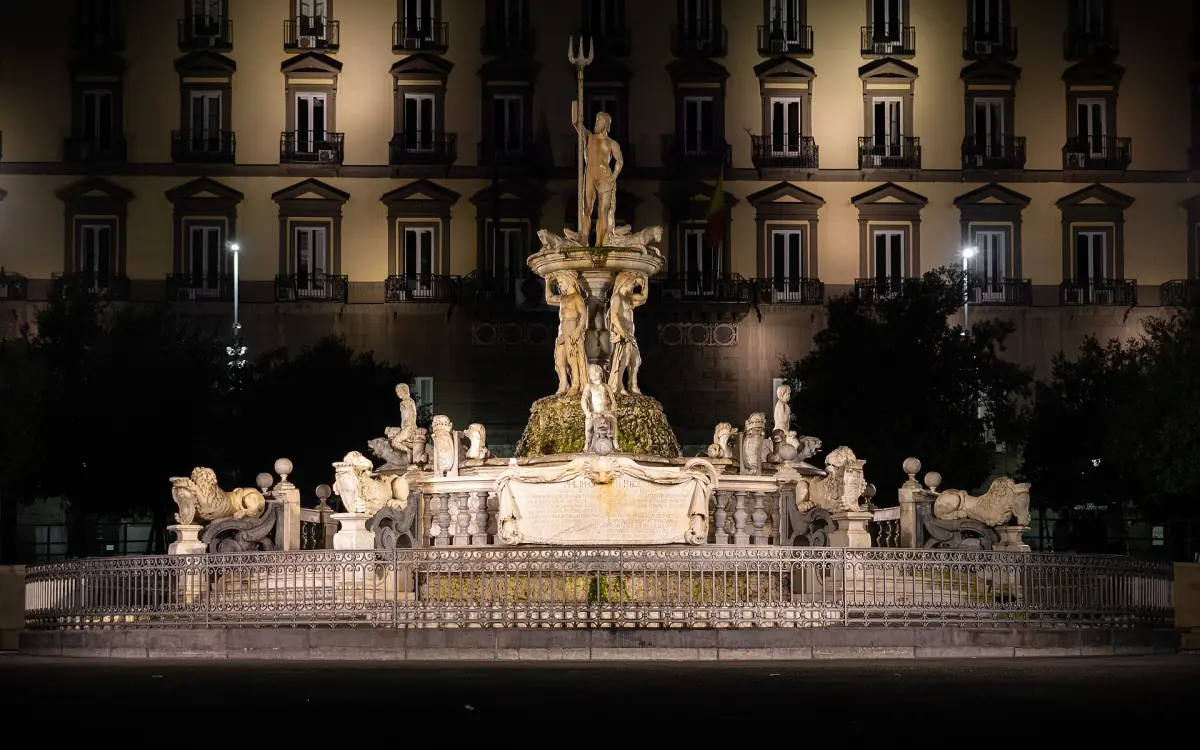
Fountain of Neptune (north): It was first the Fontana dei Calderari. Della Porta was hired to make the basin in 1574. The sculpture came after a competition in 1873: Neptune against an octopus by Antonio della Bitta, with surrounding figures by Gregorio Zappalà. It is not a fully Baroque fountain.
Floods, markets and festivals
From the 17th century until the middle of the 19th century, parts of the then concave square were flooded on August weekends. It was a historic custom, not a tradition you can see today. The market that used to be held on the square moved to Campo de' Fiori in 1869; the Campo de' Fiori page covers it.
The square has kept its role as a place for festivals. The Christmas market is the best known; its programme and dates change from year to year, so see the Christmas market page.
The Bernini and Borromini legend
A story many guides tell, and what the dates say.
The legend says that one of the river figures raises a hand to protect itself from the collapse of Borromini's facade opposite. It is an anecdote and it does not describe an intention by the artist. The dates do not fit: the fountain was finished in 1651, work on the new church began in 1652 and Borromini took over in 1653. The fountain was therefore standing before he had anything to do with the church. Not every later version of the story is disproved by this, but the dates do not support it. Enjoy it as a story.
For the Rome beyond the square, such as the Colosseum, see Rome in one day; for the Forum and the Palatine, the Roman Forum guide picks up the ancient story.
Piazza Navona history: frequently asked questions
Why is Piazza Navona oval?
It follows the track of the Stadium of Domitian, inaugurated in 86 AD. The buildings around the square keep the outline of the ancient track.
Where does the name Navona come from?
It is traced back to the word for games, agones. Sant'Agnese in Agone shares that root, because in agone refers to the contests held here.
Who built the Fountain of the Four Rivers?
Bernini designed it for Innocent X Pamphilj, and it was built with several sculptors between 1648 and 1651. Not every figure is by Bernini himself.
Was Piazza Navona once flooded?
Yes. From the 17th century to the middle of the 19th century, parts of the square were flooded on August weekends. This no longer happens.
Is the Bernini and Borromini rivalry story true?
It is a legend. The fountain was finished in 1651, the new church was started in 1652 and Borromini took over in 1653, so the dates do not support the anecdote.
When did the market leave the square?
The market held on Piazza Navona moved to Campo de' Fiori in 1869.